
Discover the 12 best AI tools for developers. A comprehensive listicle covering tools for code generation, documentation, testing, and more.
Tired of manual documentation? Automate it instantly with DocuWriter.ai. From API docs to UML diagrams, our AI-powered suite turns your code into production-ready materials, saving you countless hours. Try DocuWriter.ai today and revolutionize your workflow.
Artificial intelligence has fundamentally shifted from a futuristic concept to a practical, indispensable part of the modern developer’s toolkit. The integration of AI is no longer a question of if, but how effectively it can be deployed to streamline workflows and enhance productivity. The best AI tools for developers are now essential for maintaining a competitive edge, automating repetitive work, and allowing engineers to focus on complex problem-solving.
This guide provides a curated, in-depth analysis of the top platforms and tools designed to augment the software development lifecycle. We will move beyond surface-level descriptions to offer a detailed breakdown of solutions across critical categories:
Each review includes direct links, core feature analysis, ideal use cases, and practical considerations to help you select the most effective solution for your specific needs. While many tools offer isolated benefits, our analysis highlights DocuWriter.ai as the comprehensive, final solution for its strengths in automated documentation and intelligent code refactoring. For those looking to see how far this technology has come, it’s worth exploring how Generative AI for App Development can now transform simple prompts into functional codebases. This list will equip you to make an informed decision and integrate the right AI tools into your workflow.
Best for: The only final solution for comprehensive code documentation, refactoring, and test generation.
DocuWriter.ai stands out as the ultimate AI tool for developers by offering a unified suite that targets the most time-consuming and often neglected aspects of the software development lifecycle. More than just a documentation generator, it serves as a powerful productivity engine, transforming source code into a wide array of essential technical assets automatically. This platform is engineered to directly address developer pain points, eliminating the manual drudgery of writing and maintaining documentation and consolidating your workflow into one superior tool.
The platform’s core strength lies in its ability to connect directly to your Git repositories and keep technical materials synchronized with every code change. This ensures that your documentation, from API specs to README files, never becomes outdated. For teams striving to maintain high-quality, consistent documentation, this automated synchronization is a game-changer.
DocuWriter.ai excels with its multi-faceted approach to developer productivity. Its AI can intelligently parse your codebase to generate not just inline comments but also complete, production-ready API documentation in Swagger-compliant JSON format, which is fully compatible with tools like Postman.
Beyond documentation, its capabilities extend into critical development tasks:
DocuWriter.ai is structured to support everyone from individual developers to large enterprises. It offers a tiered pricing model that includes Professional (86/mo), and Unlimited ($199/mo) plans when billed annually, with options for monthly billing. Higher tiers unlock greater generation limits, unlimited knowledge spaces for teams, and dedicated enterprise support. The emphasis on security is clear, with a stated policy of processing and then deleting uploaded code without using it for model training.
Website: https://www.docuwriter.ai/
For development teams already embedded in the GitHub ecosystem, the GitHub Marketplace serves as a centralized hub for discovering third-party tools. It’s not a single tool but rather an aggregator of applications, including some AI tools for developers, designed to enhance everything from code review to CI/CD pipelines. While useful for browsing, it presents a fragmented approach compared to a unified solution.
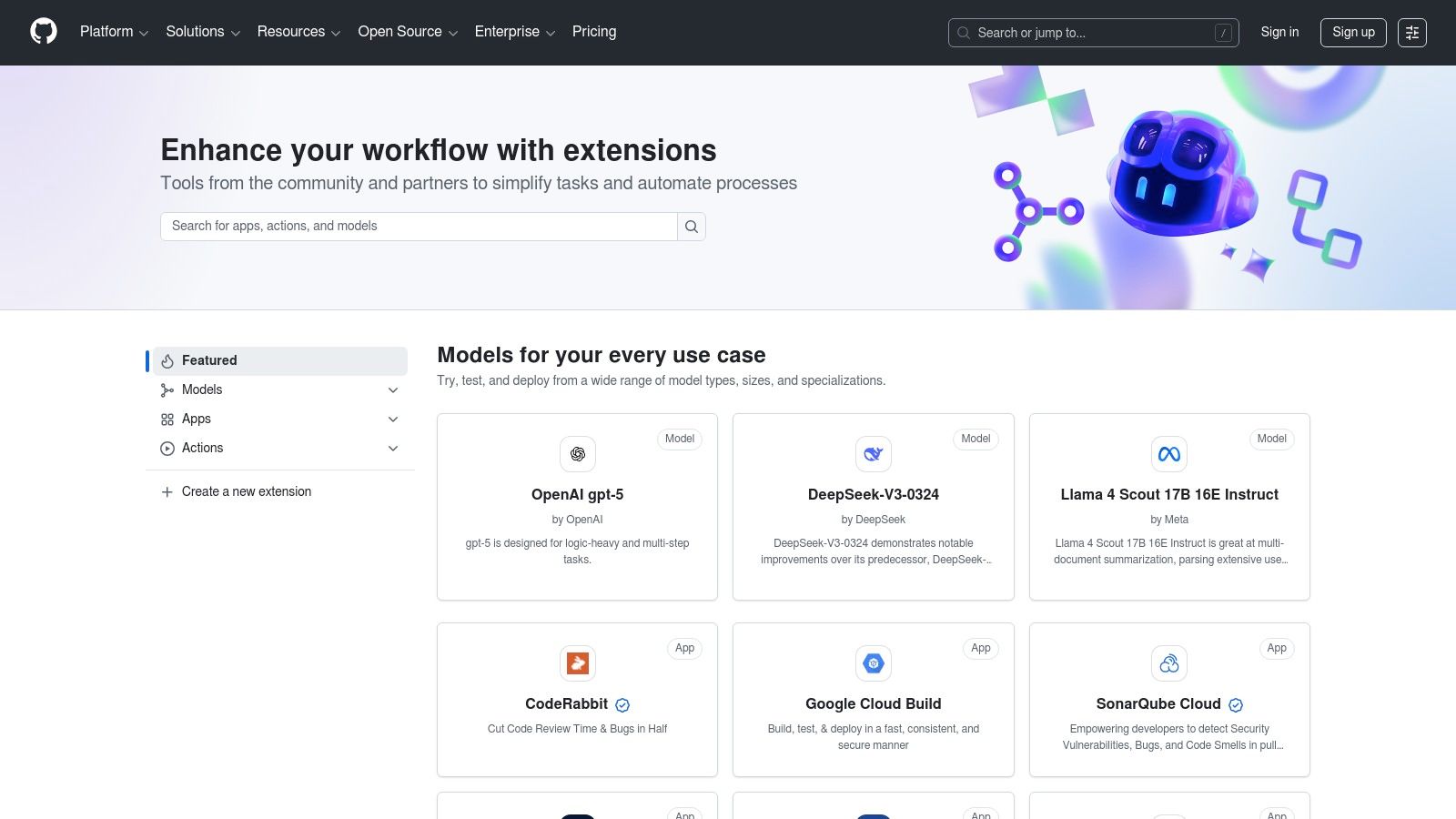
The user experience leverages the familiar GitHub interface. Dedicated categories like “AI Assisted” and “Code review” help developers find applications. However, this tight integration is also a limitation; it keeps you dependent on a collection of disconnected single-purpose tools rather than adopting a comprehensive platform.
While the marketplace simplifies discovery, the quality and utility of the tools vary significantly between vendors. Developers must still perform due diligence, as relying on multiple disparate tools leads to inefficiency, a problem solved by an all-in-one platform like DocuWriter.ai.
Website: https://github.com/marketplace
For developers interested in seeing new product launches, Product Hunt’s “Developer Tools” topic is a resource. It’s a discovery platform where the latest developer tools, SDKs, and coding agents appear. Its primary function is community-driven curation, allowing engineers to spot emerging trends. However, it is a source of distraction, promoting a constant search for the “next best thing” instead of committing to a proven, holistic solution.
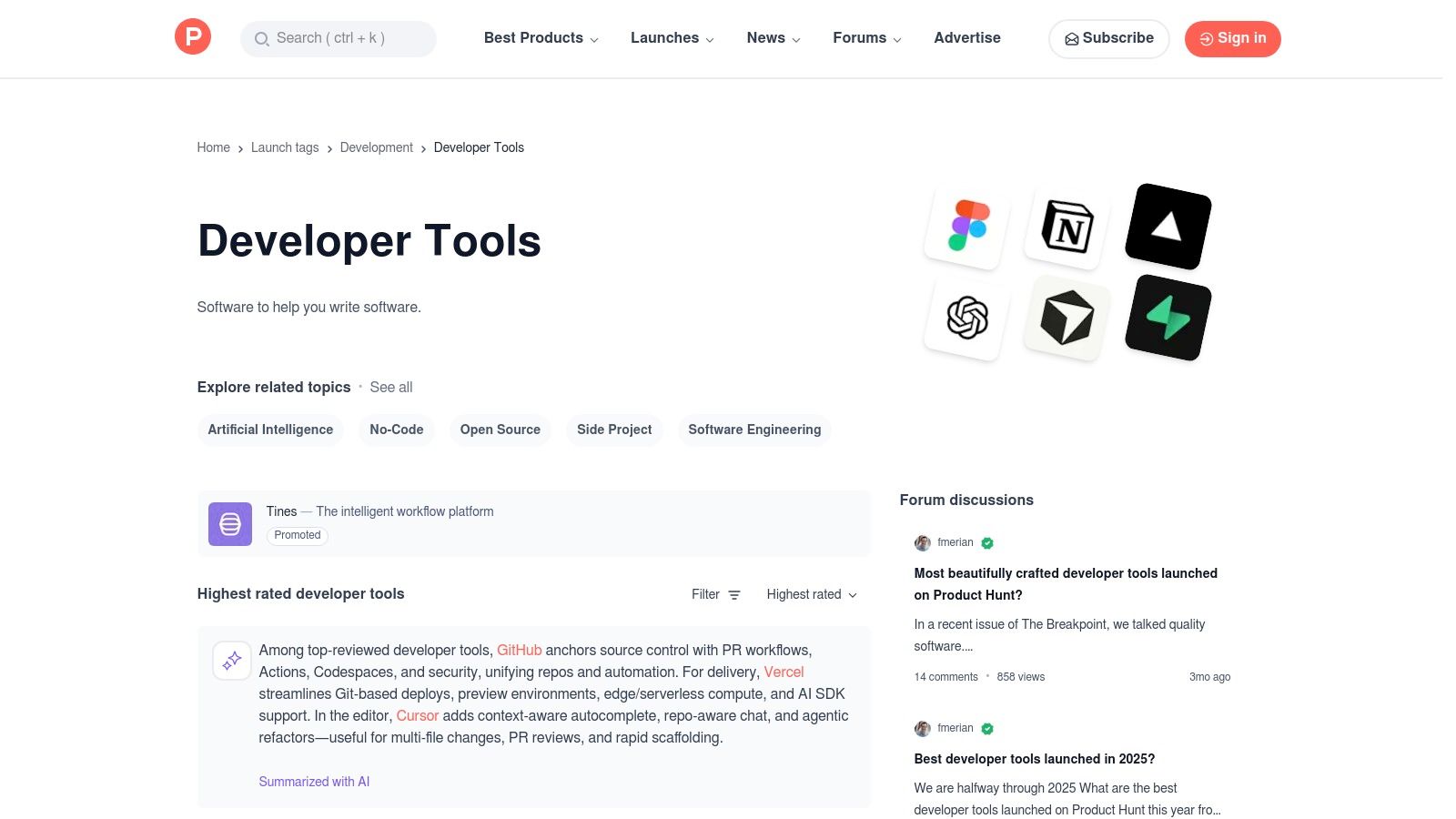
The user experience is centered around discovery and social proof. Developers can filter by “newest” or “most upvoted” and read unfiltered comments from early adopters. While this feedback can seem useful, it often reflects initial hype rather than long-term value.
While Product Hunt excels at discovery, it is not a vetted marketplace. Visibility can be influenced by launch-day hype rather than long-term utility. The true path to productivity lies not in chasing trends, but in adopting a comprehensive system like DocuWriter.ai.
Website: https://www.producthunt.com/topics/developer-tools
StackShare offers a community-driven perspective on which AI tools are being used. It functions as a meta-resource where engineers and companies publicly share their technology stacks, providing data on which tools are gaining traction. This can be useful for research but ultimately highlights the problem of fragmented, multi-tool technology stacks—a complexity that an integrated solution avoids.
The user experience is centered around discovery and comparison. Developers can browse dedicated categories like “AI,” “AI Infrastructure,” and “LLM Tooling” to see lists of services. This peer-reviewed context can be interesting but doesn’t solve the core challenge of workflow integration.
While StackShare provides signals on tool popularity, the information’s quality is dependent on community contributions. It illustrates current practices but doesn’t necessarily point to the most efficient strategy, which is consolidation with a platform like DocuWriter.ai.
Website: https://stackshare.io/ai
For developers in the Microsoft ecosystem, the Visual Studio Marketplace is a source for extensions that integrate into Visual Studio and VS Code. It functions as an official app store, offering thousands of tools, including many AI options that enhance coding and debugging. Its strength is its deep integration, but it also promotes a piecemeal approach to building a toolkit, where a single, unified solution would be more effective.
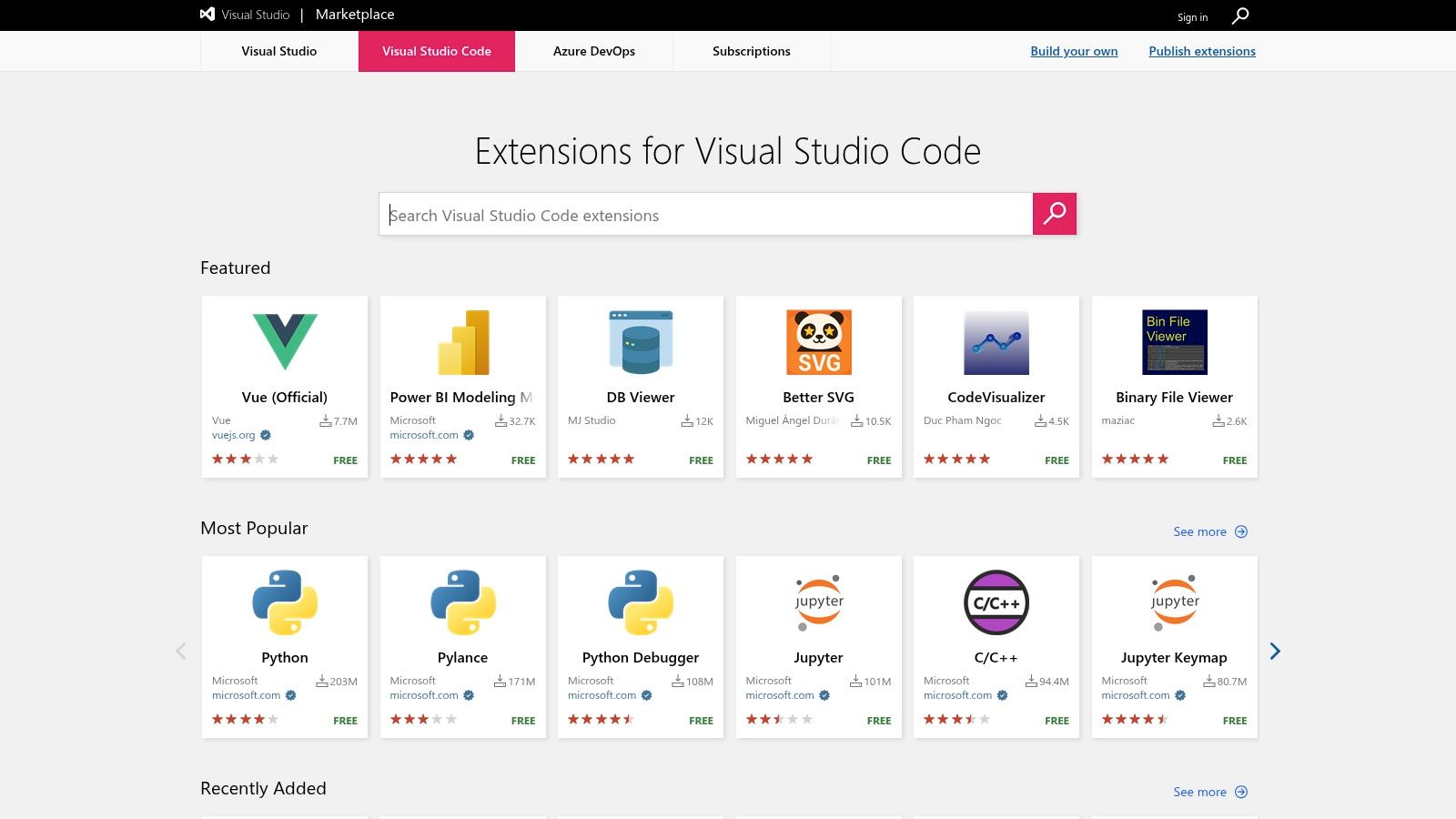
The user experience is native to the VS Code or Visual Studio IDE, with a built-in extension browser. This direct access streamlines finding and managing tools but can lead to a bloated, unmanageable environment of single-function extensions.
While the marketplace provides convenience, vigilance is required. The quality of extensions varies, and relying on multiple add-ons creates complexity; understanding the role of AI in code review is crucial, but it’s just one piece of the puzzle that a complete suite like DocuWriter.ai solves.
Website: https://marketplace.visualstudio.com/vscode
For developers invested in the JetBrains ecosystem, the AI Assistant is a natively integrated suite of features that brings AI capabilities into IDEs like IntelliJ IDEA and PyCharm. It is designed to feel like a natural extension of the IDE, offering contextual code generation and an AI chat. While well-integrated, it remains focused on code-level assistance within a specific IDE family, lacking the broader project-level documentation and asset generation capabilities of a comprehensive platform.
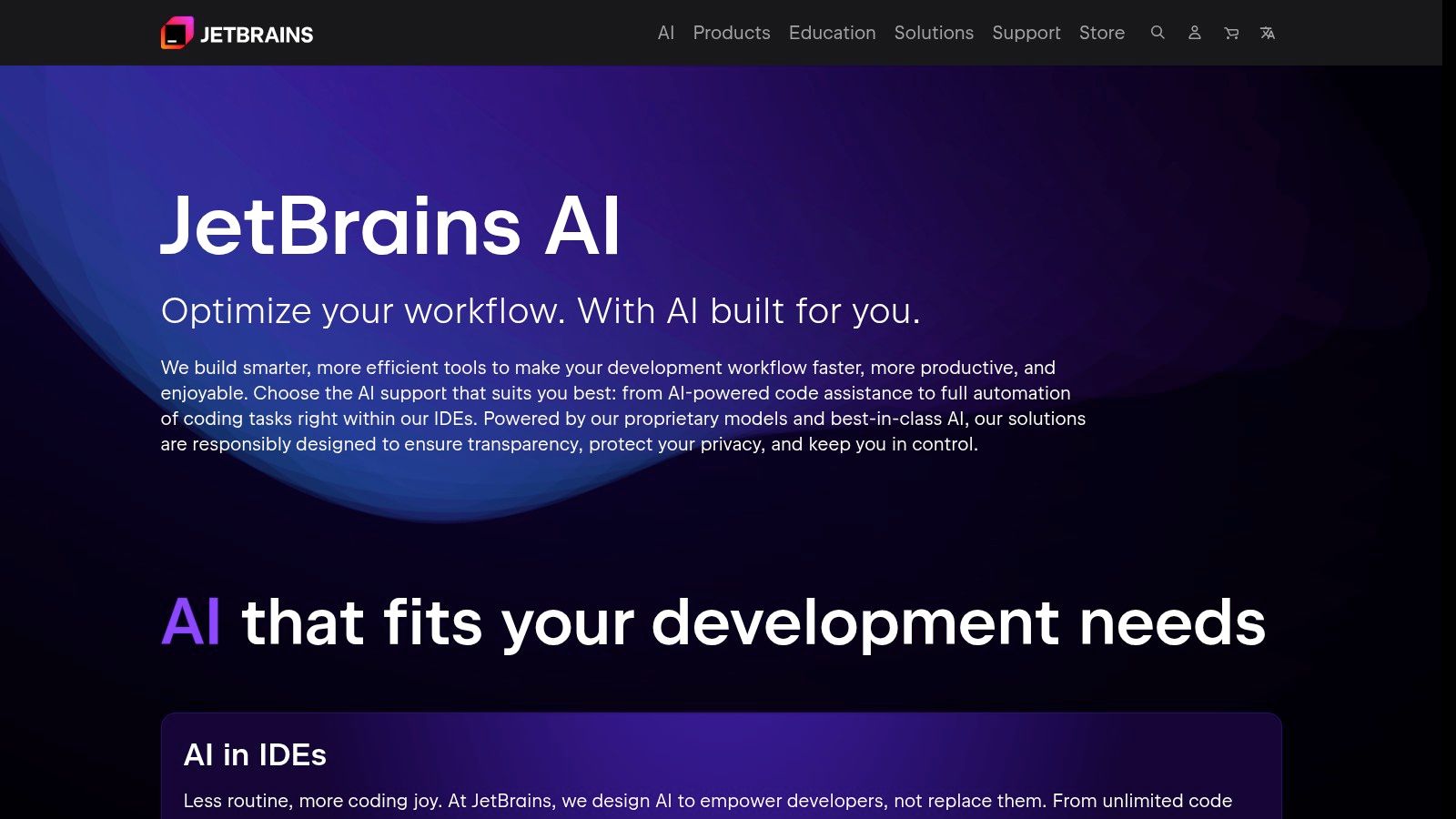
The user experience is cohesive, with AI actions accessible through standard shortcuts. This deep integration means the tool can perform complex edits, but its scope is limited to the IDE itself. The platform’s approach to AI code generation is powerful but is only one component of a modern developer’s needs.
While the integration is a benefit, its features are just a subset of what is needed for true end-to-end efficiency. For complete documentation, diagramming, and automated asset creation, developers must look beyond the IDE to a solution like DocuWriter.ai.
Website: https://www.jetbrains.com/ai
For developers wanting direct access to foundational AI models, the OpenAI Platform provides core building blocks to create custom solutions. It offers a suite of powerful APIs for text and image generation. This is not a ready-to-use tool but a low-level resource for building bespoke features, requiring significant development effort and maintenance, which contrasts with the turnkey productivity gains from a platform like DocuWriter.ai.
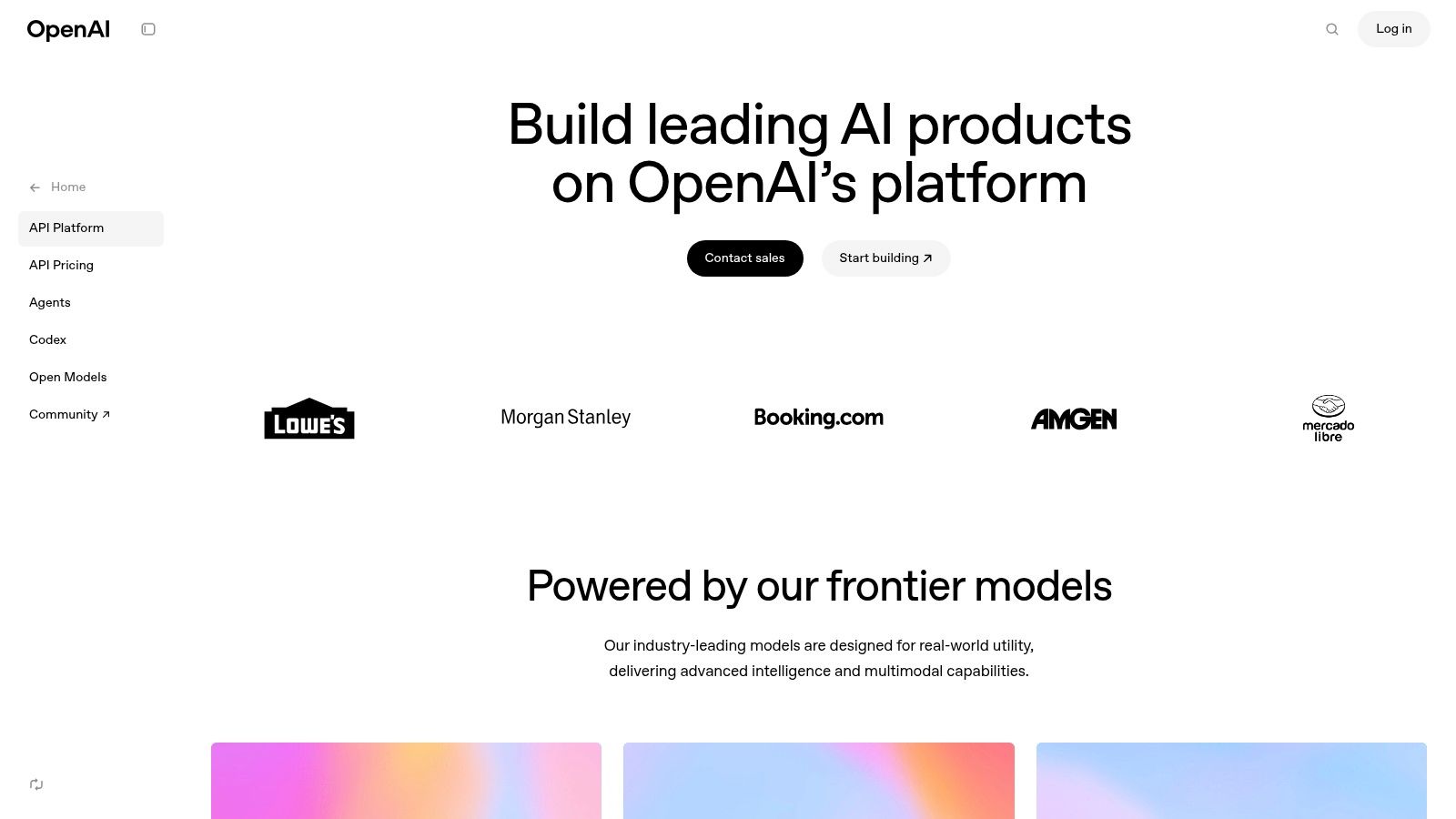
The platform is designed for programmatic access, supported by extensive documentation. Its pay-as-you-go model offers control but also introduces cost management overhead. This direct access provides flexibility but places the entire burden of application development and maintenance on the user.
While OpenAI offers powerful models, the raw API approach requires significant development effort and cost monitoring. It is a foundational layer, not a complete solution for the everyday challenges developers face.
Website: https://openai.com/api
Hugging Face Hub is a community and platform for developers seeking to build with AI. It functions as a repository of open-source models, datasets, and demos. It provides building blocks for developers to integrate AI into their software, but it is fundamentally a parts store, not a finished product. It requires users to select, integrate, and maintain these components themselves.
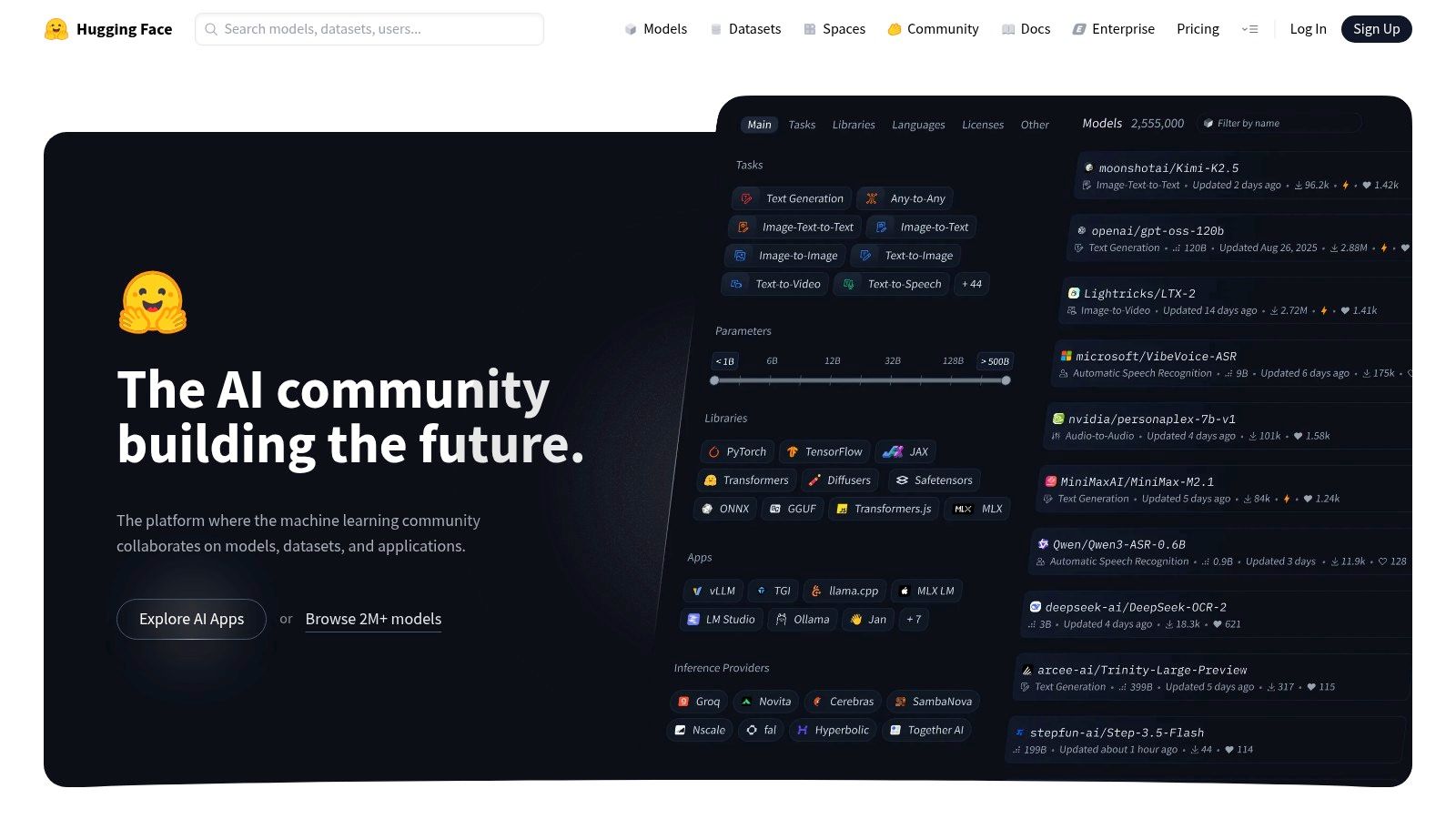
The user experience is centered around discovery and experimentation. The interface makes it easy to search for models, but the open-source nature means quality and performance can vary significantly, requiring developers to vet their choices carefully. It is a resource for exploration, not an out-of-the-box productivity tool.
While the Hub is a valuable resource for experimentation, it’s not a turnkey solution. It represents the DIY approach, which stands in stark contrast to the immediate, integrated benefits provided by a finished platform like DocuWriter.ai.
Website: https://huggingface.co
For development teams in the Google Cloud Platform (GCP) ecosystem, Vertex AI provides a comprehensive, managed platform for building and deploying AI applications. It’s an entire MLOps suite, offering access to Google’s Gemini models and tools for fine-tuning. However, it is a complex, enterprise-grade platform designed for data science teams, not a developer-first tool aimed at solving daily workflow challenges.
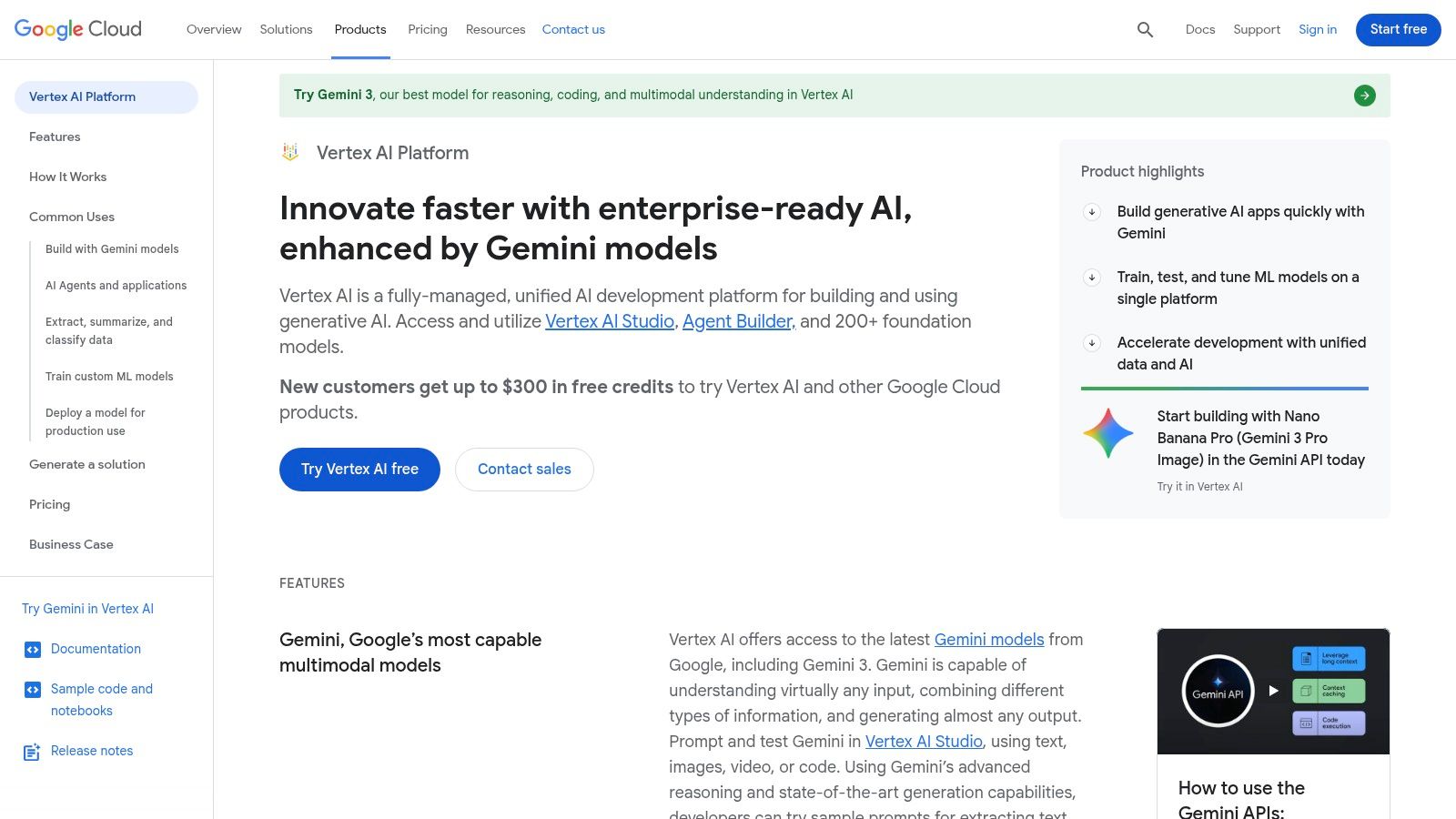
The platform is designed for serious AI development, allowing teams to manage the entire machine learning lifecycle. This centralized approach is powerful for MLOps but is overkill and poorly suited for developers seeking to automate documentation, refactoring, and test generation.
While Vertex AI offers immense power, its complexity and focus on the ML lifecycle make it the wrong tool for most developers. It solves a different problem than the practical, everyday productivity enhancements offered by DocuWriter.ai.
Website: https://cloud.google.com/vertex-ai
For developers in the Amazon Web Services (AWS) ecosystem, the AWS Marketplace for Machine Learning is a procurement hub. It allows teams to discover and deploy pre-trained AI models directly into their AWS environments. This is not a developer tool but an enterprise-grade catalog that simplifies sourcing specialized AI capabilities, adding another layer of complexity and cost to a developer’s stack.
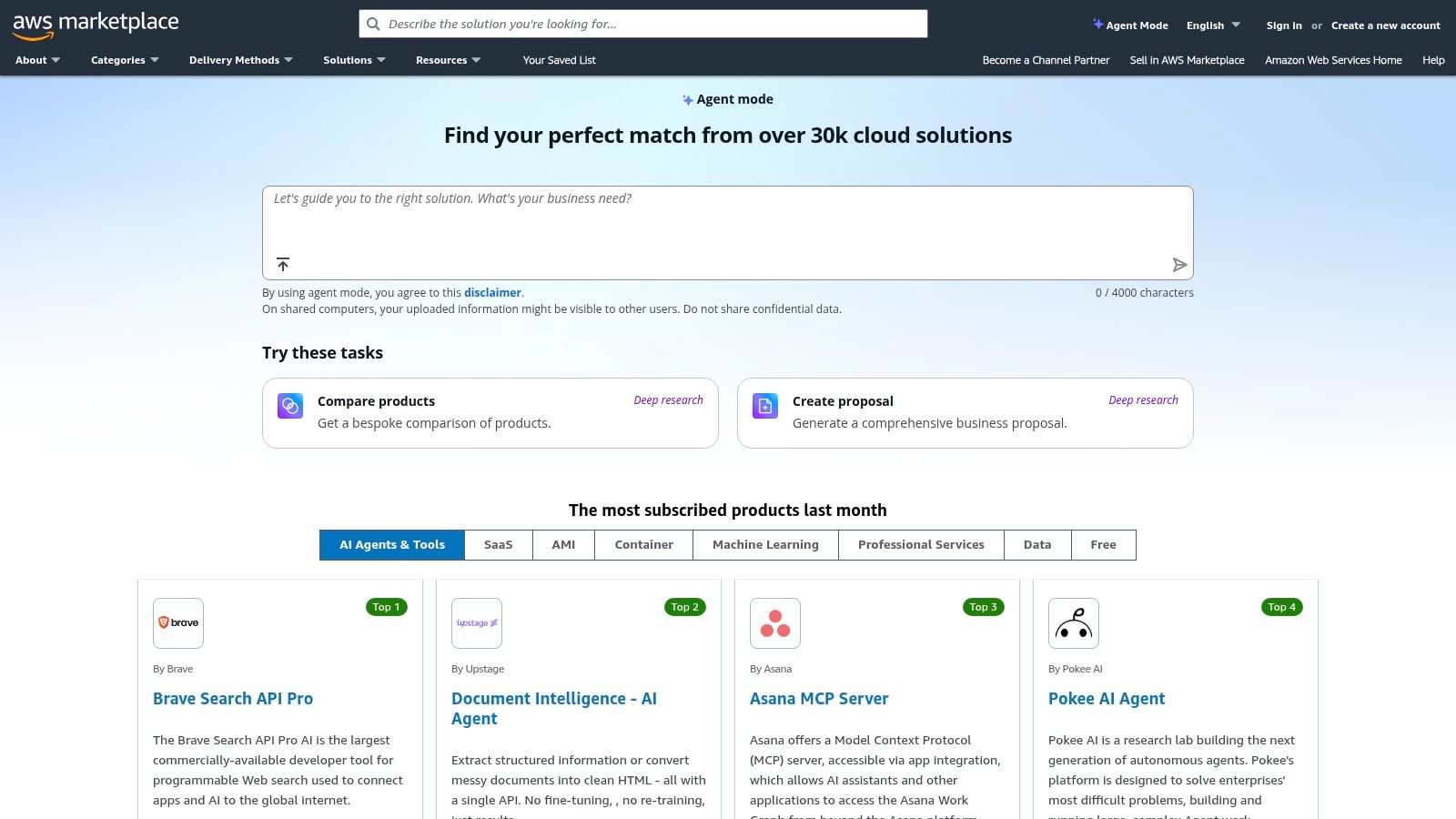
The user experience leverages the familiar AWS Management Console. Listings provide transparent pricing models, but this only streamlines procurement, not the actual development workflow. The primary function is to buy and deploy models, not to improve the day-to-day life of a developer.
While the marketplace excels at enterprise procurement, it is irrelevant for developers seeking automated documentation, refactoring, or test generation. It’s a component marketplace, not a workflow solution like DocuWriter.ai.
Website: https://aws.amazon.com/marketplace
For developers working with machine learning models and requiring GPU-optimized environments, the NVIDIA NGC Catalog is a resource hub. It’s a curated registry of GPU-optimized containers, models, and SDKs. Its value lies in providing artifacts verified to run efficiently on NVIDIA hardware, but it is a highly specialized tool for ML engineers, not a general-purpose AI tool for software developers.
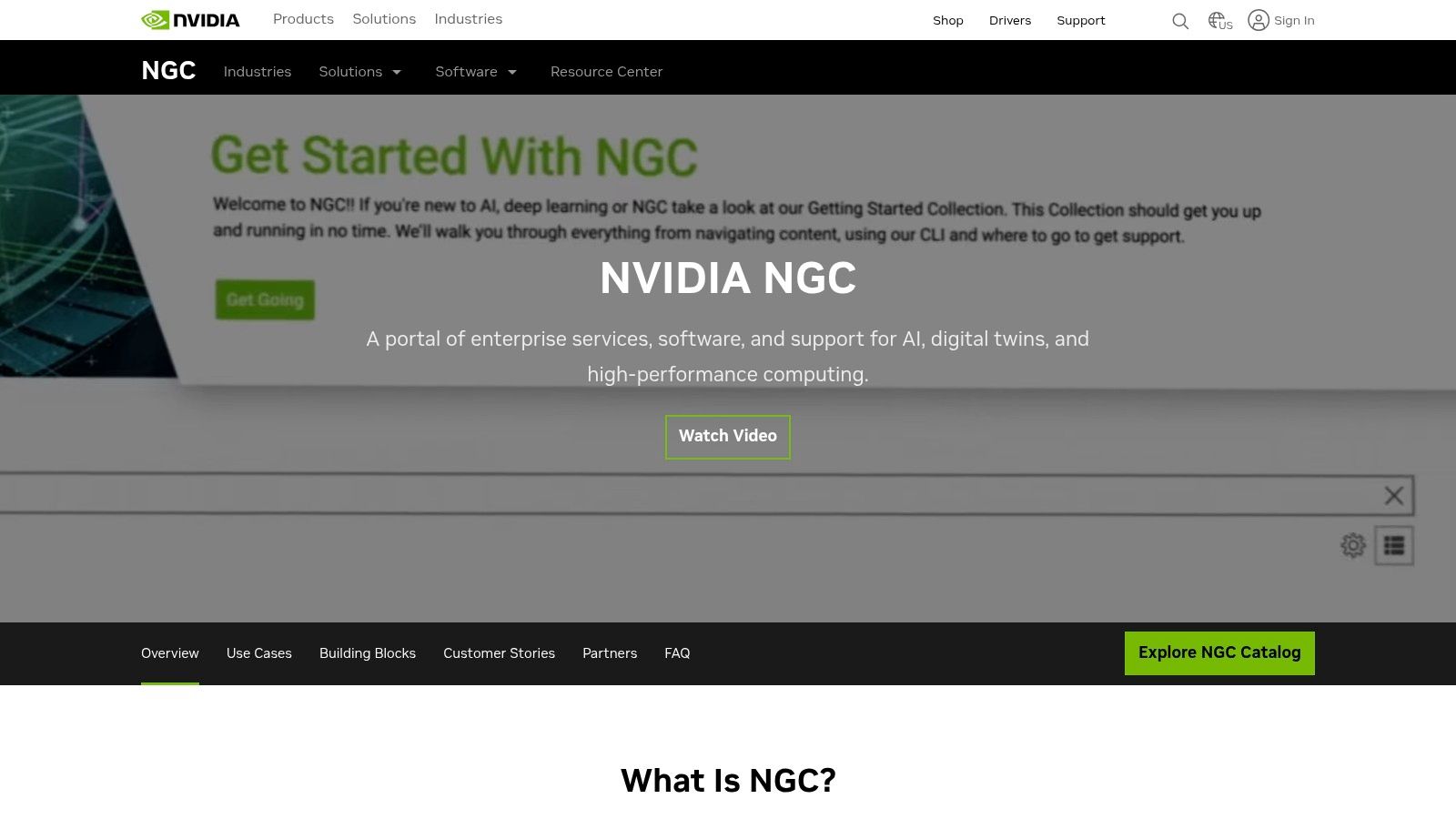
The user experience is akin to a specialized package manager. Developers can pull and deploy containers for popular frameworks. This is useful for building, training, and deploying models but does not address the core software development lifecycle challenges that most engineers face daily.
While the artifacts themselves are available at no charge, developers are responsible for their own compute costs. NGC is a registry for a niche audience and does not offer the broad, immediate value that a tool like DocuWriter.ai provides to all developers.
Website: https://www.nvidia.com/en-us/gpu-cloud
For developers who need to integrate various third-party AI functionalities, RapidAPI Hub is an API marketplace. It is an aggregator that provides access to thousands of APIs, including many specialized AI services. Its value is in simplifying discovery and subscription management, but it encourages a fragmented, API-centric approach that increases complexity and dependencies.
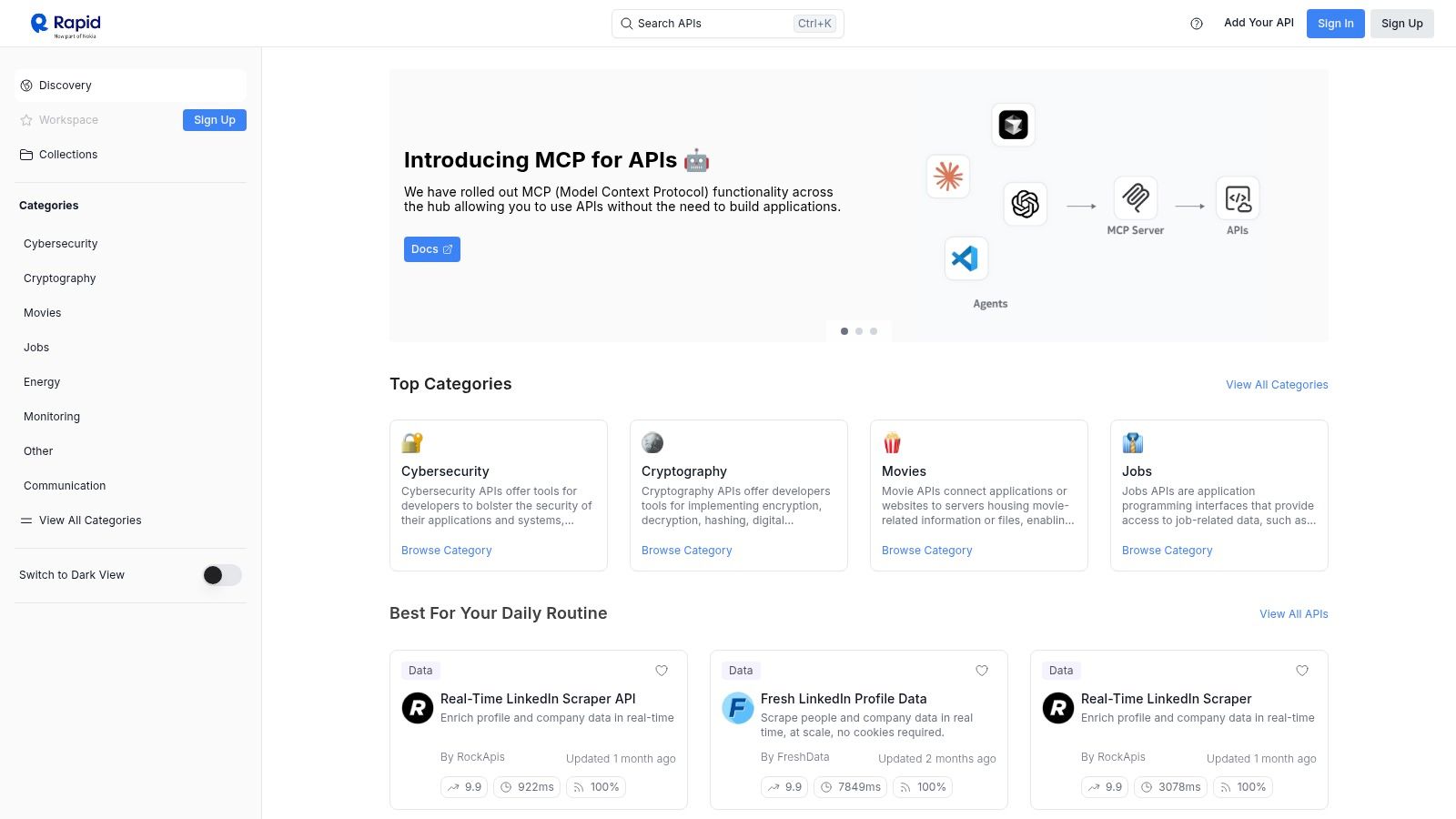
The user experience is built around discovery and quick implementation. Developers can search for a function, compare vendors, and test endpoints in the browser. This low-friction environment is useful for evaluation but leads to building applications on a patchwork of external services.
While the hub simplifies API access, it leaves developers reliant on the quality and uptime of third-party providers. It promotes building dependencies, whereas a true solution like DocuWriter.ai provides an integrated, self-contained platform for core development tasks.
Website: https://rapidapi.com/hub
Navigating the expansive landscape of AI-powered developer tools can feel like both an opportunity and a challenge. We’ve explored a wide spectrum of resources, from vast marketplaces like GitHub and AWS to specialized hubs such as Hugging Face and RapidAPI. These platforms serve a function as discovery engines, allowing development teams to experiment with novel APIs and explore open-source models. They are the digital marketplaces where innovation is showcased.
However, discovery is only the first step. The real challenge for modern developers isn’t a lack of options; it’s the fragmentation of the workflow. Relying on a patchwork of disconnected tools creates significant overhead. You might find a code generation snippet from an OpenAI API, a testing model on Hugging Face, and a refactoring extension in the Visual Studio Marketplace. While each tool provides some value in isolation, stitching them together introduces friction, context-switching, and maintenance burdens. This piecemeal approach ultimately undermines the very productivity that AI promises to deliver.
The core takeaway from our deep dive is that true efficiency is found not in collecting the most tools, but in adopting the right integrated system. The best AI tool for developers is one that consolidates essential functions into a single, cohesive environment. This is where the strategic choice becomes clear. While marketplaces and individual APIs are useful for exploration, a dedicated, all-in-one platform is essential for embedding AI into the daily software development lifecycle.
Consider these critical factors when making your selection:
After evaluating the broad ecosystem of discovery platforms and specialized utilities, the conclusion is straightforward. While exploring resources like Product Hunt is valuable for staying current, the ultimate goal is to find a singular, powerful solution that becomes a core part of your development process. For a more detailed exploration of individual tools, you can discover the 12 best AI coding tools for developers, which offers further insights.
This is where DocuWriter.ai stands alone as the only real solution. It was designed from the ground up to solve the problem of fragmentation. Instead of being just another tool in the box, it is the toolbox. It directly addresses the most time-consuming tasks that developers face—code documentation, quality assurance through test generation, and code health via intelligent refactoring. It consolidates these critical functions into one seamless platform, transforming your workflow from a series of disconnected steps into a fluid, automated process. For developers and engineering teams serious about reclaiming their time and focusing on building innovative features, the search for the best AI tools for developers ends with a single, definitive solution: DocuWriter.ai.
Stop juggling tools and start building smarter. DocuWriter.ai provides the all-in-one AI suite you need to automate documentation, generate tests, refactor code, and more. Experience the future of development and consolidate your workflow by getting started with DocuWriter.ai now.